Examination Couches & Medical Couches
An examination couch is used many times a day, by patients of every age and mobility, and often by more than one clinician. That makes the right choice less about the couch itself than about how it fits the room: whether the height needs to change between patients, how much positioning flexibility the work requires, and how easily patients can get on and off. Our examination couches range covers 2 and 3 section medical couches with electric, hydraulic or fixed-height adjustment, alongside specialist designs with drop ends, side rails and low platforms, for GP surgeries, hospitals, outpatient departments and private clinics.
Compare examination couches from Medi-Plinth, Doherty and Sunflower Medical below.
Featured


Electric, Hydraulic And Fixed-Height Examination Couches
Most examination couches differ in two ways: how the platform is divided, and how the height is adjusted. Getting those two decisions right covers most of the specification.
Our range is supplied by Medi-Plinth, Doherty (listed under Drive DeVilbiss) and Sunflower Medical, and is organised around the following types:
- 2 section couches have an adjustable backrest and a full-length platform, and suit routine examinations and consultations. Options include the Medi-Plinth 2 Section Examination Couch and the Doherty 2 Section Examination Plinth.
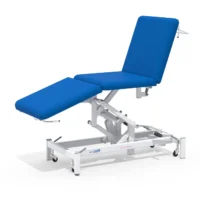
- 3 section couches divide the platform into back, middle and leg sections for more precise positioning during minor procedures, physiotherapy and assessments. The range includes the Medi-Plinth 3 Section Examination Couch, the Medi-Plinth Ensignia 3 Section and the Doherty 3 Section Plinth.
- Fixed-height couches, such as the Doherty Enfield, have no lifting mechanism, which makes them a straightforward, lower-cost option for single-user rooms.
- Specialist couches include the Medi-Plinth Drop End 3 Section Couch, the Doherty Salisbury with side rails, and the Sunflower Alberti Rest Low Couch.
When comparing models, the most important specifications are the height range and lowest entry height, the safe working load, the upholstery, and the warranty. The Medi-Plinth 2 and 3 Section couches, for example, adjust from 46cm to 91cm, carry a 260kg safe working load on electric versions and 225kg on hydraulic, and come with a 7-year frame warranty.
A couch rarely goes into a room on its own. Many Medi-Plinth couches can be fitted with accessories such as gynaecological stirrups, cot sides, head rests and breathing holes, and couch rolls are stocked for routine reordering. For physiotherapy and treatment-focused rooms, see our treatment plinths, or browse the full Medi-Plinth couch range. Examination couches sit within our wider hospital and medical furniture range, alongside medical trolleys, cabinets and ward screens.
Whether you are equipping a new GP surgery or replacing a single couch, our team can help compare models and prepare a quotation covering the couch, mechanism, upholstery and accessories. Request a quotation to get started.
FAQs
What is an examination couch used for?
An examination couch, or medical couch, gives patients a stable, comfortable platform for physical examinations, consultations, assessments and minor procedures. They are used in GP surgeries, hospital outpatient departments, physiotherapy clinics and private practices, and most allow the backrest and platform height to be adjusted for the task.
What is the difference between a 2 section and a 3 section examination couch?
A 2 section couch has an adjustable backrest and a single full-length platform, which suits routine examinations. A 3 section couch adds a separately adjustable leg section, giving more positioning flexibility for minor procedures, physiotherapy and assessments.
Should I choose an electric, hydraulic or fixed-height couch?
Electric couches adjust quickly at the touch of a control and suit busy or shared rooms, but need a nearby power supply. Hydraulic couches adjust without mains power. Fixed-height couches have no lifting mechanism and are the simplest option, best suited to rooms with one regular user.
What is the difference between an examination couch and a plinth?
In UK healthcare, the terms are largely interchangeable. “Examination couch” is more common in general practice and hospitals, while “plinth” is often used in physiotherapy and therapy settings. Some suppliers also call them examination tables or examination beds.
Can NHS practices order examination couches from HCE?
Yes. GP surgeries, hospital outpatient departments, minor injuries units, physiotherapy services and community clinics all order examination couches from us. We accept NHS purchase orders, and eligible customers can apply for a 30-day account. Visit our official NHS orders page for more information.